Rack Build Continued
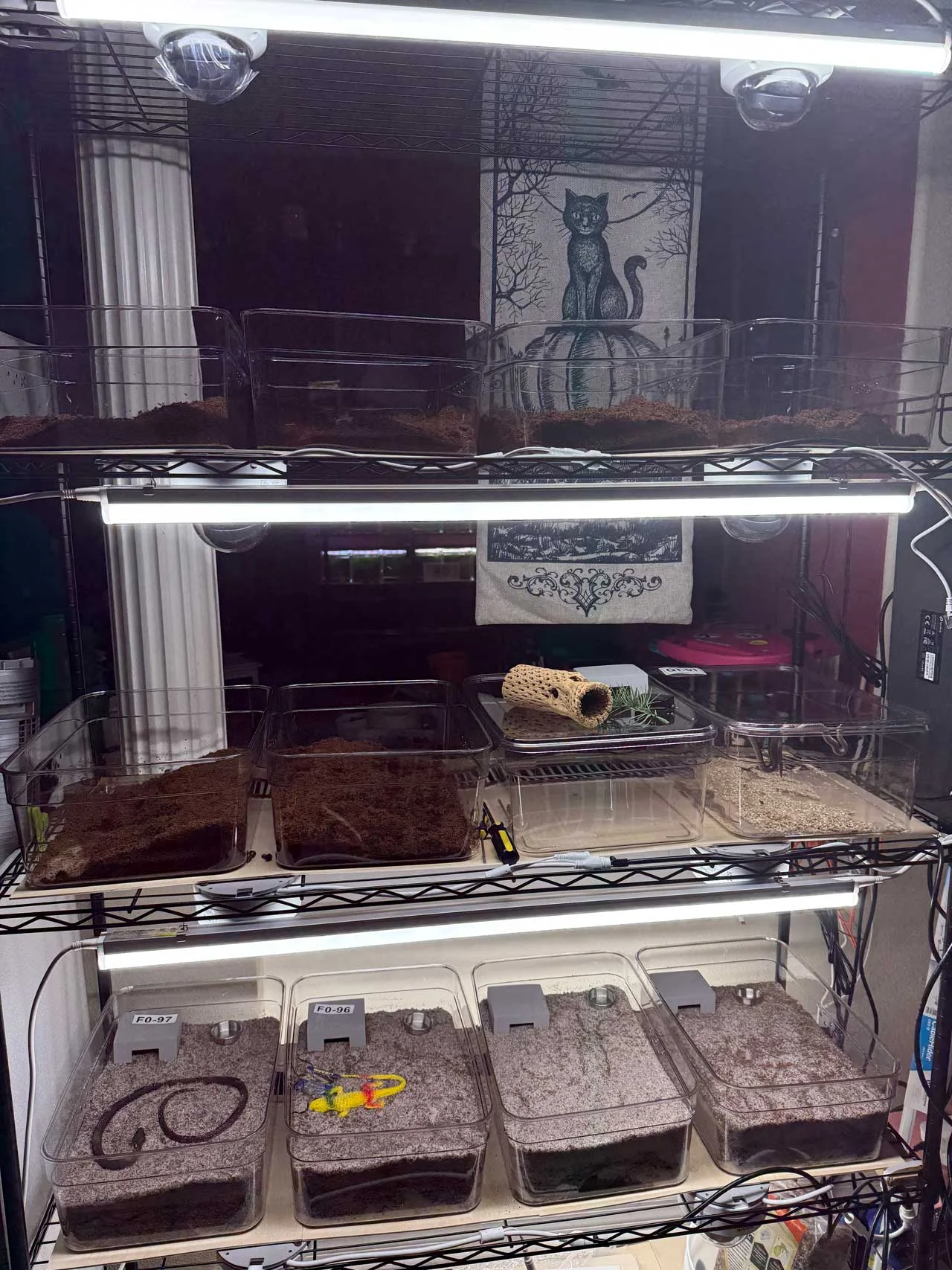
Since the test substrate went in on October 18, the rack has gone from one test camera to a working observation system.
Cameras. Eight of the ten rack cameras are now mounted and recording. They are ANNKE C1200D 12-megapixel dome cameras, one over every pair of tubs, with infrared for night viewing. Each camera is numbered by its slot on the rack, CAM-01 through CAM-08, so the name always tells you where it is. Every camera keeps Eastern time automatically, so recordings line up with our care logs. Two more cameras will complete the rack.
Network and power. The cameras run on a TP-Link 16-port PoE+ switch. One cable to each camera carries both power and video. The switch is on its own battery backup (a CyberPower UPS), so a short power blip doesn't drop the cameras or the recording. Video goes to a dedicated observation computer that saves every camera to a 4 TB drive.
Lighting. Each row has a Barrina T5 LED light (5000K daylight). Our first lights caused glare and fogging that the motion system read as an animal moving. We moved the lights behind the cameras and added small vent holes along the lid edges, and false motion dropped from as high as 85% of the tub to almost nothing. The lights run on timers through the row thermostats.
Founders in quarantine. Our first four founders arrived on October 19 and 21 and are in quarantine together before they move into the rack. A camera watches the quarantine tubs too. On their first night out, all four were visible on camera and we could tell each one apart by its morph.
Smarter live view. The live camera view now draws a box around each tub. The software also tries to box the animal itself. That part is a test: sand boas are hard to spot in sand, and the system is still learning. We won't count it as study data until we've measured how accurate it is.
Coming next:
- Rack cleanup and Cable Management
- The last two cameras
- Moving the founders onto the rack after quarantine
- Labeling our own video to train the animal finder on sand boas