Test substrate added.
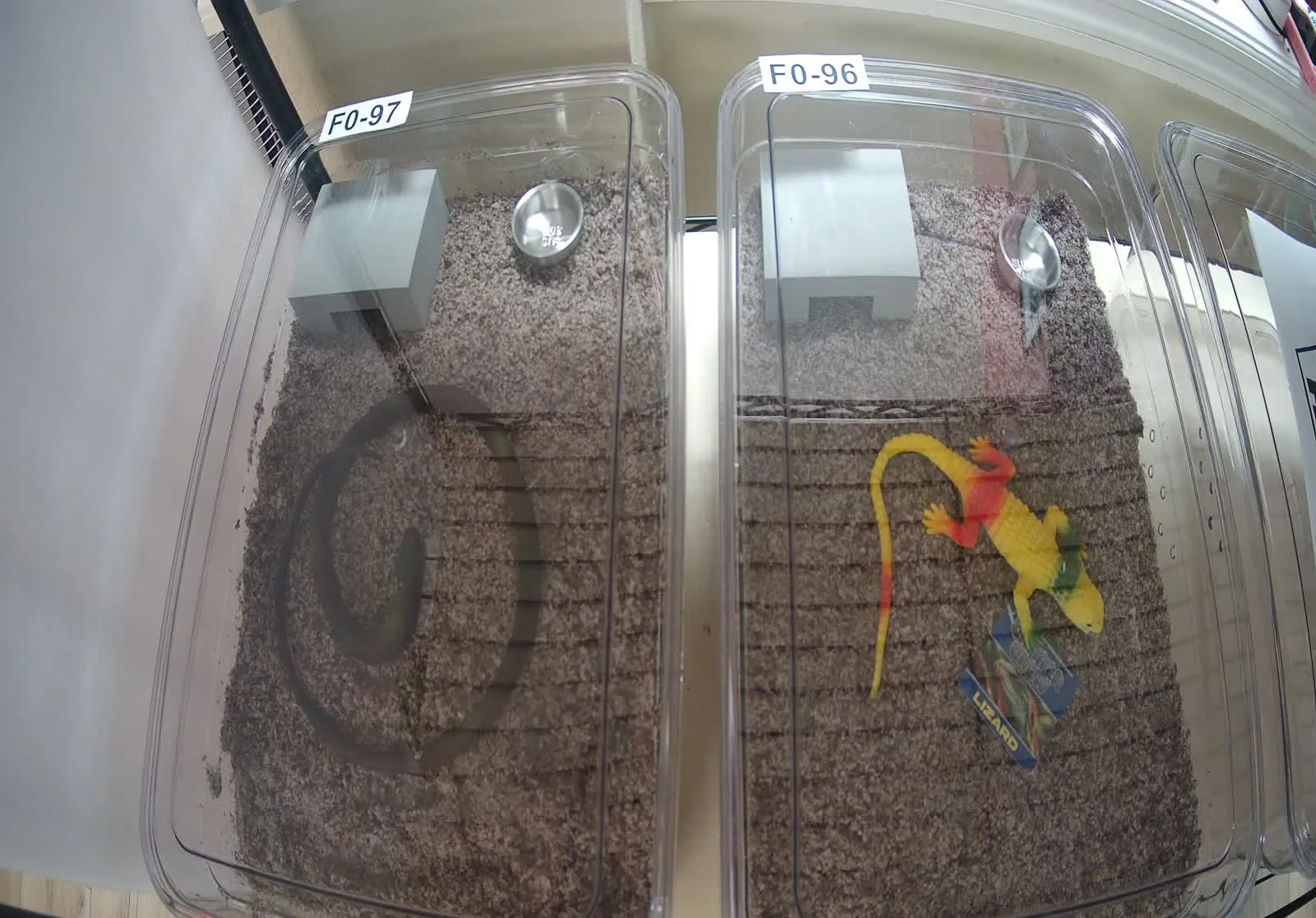
The test tubs on the rack finally have substrate. Until today every camera test was done in empty tubs, which is not how a sand boa lives. A sand boa spends most of its time in and under sand, so the camera has to work with sand in the picture.
The mix is now a fixed part of the study. Every tub gets exactly the same thing:
- 70% washed play sand, 30% coconut soil, measured by volume
- Mixed together, not layered, in one batch for the whole rack
- 3 inches deep, about 4 scoops of our 8-cup measure per tub
- Coconut soil expanded and dried until barely damp
Why 70/30? We picked it for the camera. The software has to tell a snake apart from the sand, day and night. Plain sand is close to the orange of a normal Kenyan sand boa, so a slightly darker mix makes the whole snake stand out. It is also the same mix Breathitt and I tested back in September.
First look on camera:
- The tub labels still read clearly.
- The bright toy lizard stands out sharply.
- The black rubber snake is harder to see. That is expected: dark animals blend into a mid-tone substrate. Our founders will be orange and brown, which shows up well.
One mistake to own: I forgot to turn on maintenance mode while I worked, so the camera logged my hands as movement for about half an hour. That time is excluded from the data.
Next we check how the substrate looks to the camera at night under infrared, and compare a full day of movement readings against the empty-tub baseline.